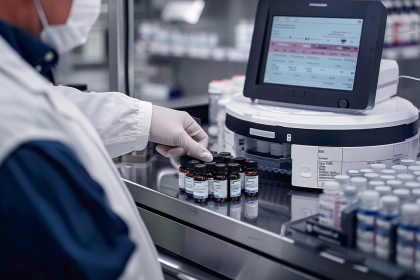



These substances must meet stringent quality benchmarks to ensure they are safe, pure, and effective when used in human or veterinary treatments.
What Defines Pharmaceutical Grade?
To be classified as pharmaceutical grade, a chemical must comply with pharmacopeial standards typically those set by bodies such as the United States Pharmacopeia (USP), European Pharmacopoeia (Ph. Eur.), or Indian Pharmacopoeia (IP). These standards define acceptable levels of purity, potency, residual solvents, and microbial contamination.

Grades lower than pharmaceutical — such as food, industrial, or technical grade may not meet the purity levels or safety profiles required for pharmaceutical use. This distinction is especially critical for injectable, ophthalmic, and biopharmaceutical applications where even trace impurities can pose risks.
Applications Across Formulations
Pharmaceutical grade chemicals are present in all major dosage forms:
- Oral formulations use pharmaceutical grade binders, disintegrants, and fillers.
- Injectables require pyrogen-free, sterile excipients.
- Topicals need excipients that are non-reactive, dermatologically safe, and compliant with local regulations.
- Biologics and mRNA vaccines increasingly depend on custom-grade lipids, amino acids, and stabilizers.
Common Categories of Pharmaceutical Grade Chemicals
- Amino Acids : e.g., L-Arginine, Glycine (used in parenterals, cell culture)
- Polyols : e.g., Glycerol (synthetic or plant-derived), used in oral and topical formulations
- Solubilizers : e.g., Polysorbates, PEGs
- Buffers and pH adjusters : e.g., Citric Acid, Sodium Hydroxide
- Preservatives : e.g., Benzyl Alcohol (must meet parenteral-grade quality)
- Stabilizers : e.g., EDTA, used in plasma and vaccine formulations
Each category must be validated for multi-compendial compliance (e.g., USP/NF, EP, JP) and in some cases, GMP manufactured for regulated markets.
Global Demand and Compliance Pressure
With the rising focus on quality-by-design (QbD), regulatory agencies now expect full traceability and compliance documentation even for inactive materials. The European Medicines Agency (EMA) and US FDA both scrutinize excipient sources during New Drug Application (NDA) or ANDA review.
Emerging therapeutic platforms like cell therapy, biologics, and personalized medicine are further pushing the demand for custom pharmaceutical grade materials with precise specifications free from animal-origin components, allergens, and contaminants.

Looking Ahead
As the pharmaceutical industry continues to globalize, manufacturers are increasingly sourcing pharmaceutical grade chemicals that are region-compliant, multi-functional, and supported by robust documentation (like DMF, TSE/BSE, GMO, and Halal/Kosher certifications).
For formulation scientists and regulatory teams alike, the selection of the right grade and supplier is no longer just a technical decision — it’s a critical step in ensuring patient safety, product performance, and market approval.
Chemical Grade Comparison Chart
| Criteria | Pharmaceutical Grade | Food Grade | Industrial Grade |
|---|---|---|---|
| Purity Level | Highest (≥ 99.9%) | High (≥ 95%–98%) | Moderate to Low (varies by use) |
| Intended Use | Drug formulations, injections, vaccines | Human food consumption (additives etc.) | Cleaning agents, paints, fuels |
| Regulatory Oversight | Strict (USP, EP, JP, FDA, ICH) | Moderate (FDA, FSSAI) | Minimal to none |
| Testing Requirements | Microbial, endotoxin, heavy metals, etc. | Pathogen, contaminants, additives | Usually none or limited |
| Traceability | Fully traceable with COA & GMP systems | Limited batch traceability | Often untracked |
| Safety Profile | Sterile, non-pyrogenic, non-toxic | Safe for ingestion | May contain impurities/toxins |
| Application Sensitivity | Injectable & critical therapies | General food items | Industrial processing, machinery |
| Price | Highest | Moderate | Lowest |