

Understanding Benzyl Alcohol
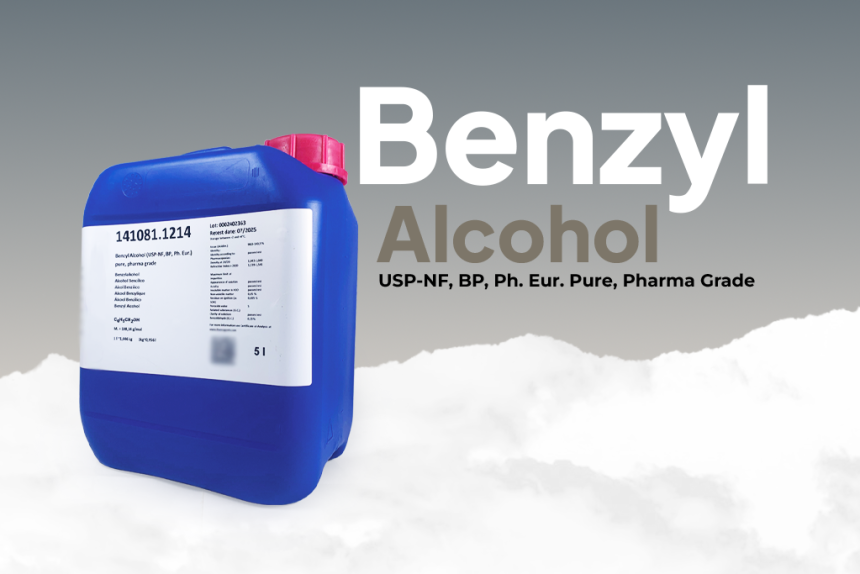
Benzyl alcohol is an aromatic alcohol with the chemical formula C6H5CH2OH. It is a clear, colorless liquid with a mild, pleasant aroma and low volatility. In the pharmaceutical sector, it is valued for its ability to dissolve a wide range of active pharmaceutical ingredients (APIs) while also exhibiting antimicrobial properties at specific concentrations.
Pharmaceutical Applications
The utility of benzyl alcohol in pharma is extensive, spanning injectable formulations, topical creams, and oral solutions. In multi-dose vials, it serves a critical preservative role, preventing microbial growth during repeated use. Its solvent capabilities are equally important, aiding in the dissolution of poorly water-soluble APIs.
- Injectable Formulations: Commonly used in multi-dose injectable products to inhibit microbial contamination.
- Topical Preparations: Acts as both a penetration enhancer and antimicrobial agent.
- Oral Solutions: Functions as a flavoring agent and solvent for certain APIs.
Regulatory Standards and Safety
Regulatory bodies, including the U.S. Pharmacopeia (USP), European Pharmacopoeia (Ph. Eur.), and British Pharmacopoeia (BP), define stringent purity criteria for pharmaceutical-grade benzyl alcohol. Safety evaluations have established acceptable concentration ranges to minimize potential toxicity, particularly in pediatric formulations where overexposure can be harmful.
- Concentration Limits: Typically restricted to 1–2% in parenteral products for safe patient use.
- Storage Guidelines: Should be stored in tightly closed containers away from heat and light to maintain stability.
- Quality Testing: Includes purity assays, identification tests, and checks for residual solvents.
Production and Quality Control
High-purity benzyl alcohol for pharmaceutical use is generally produced via hydrolysis of benzyl chloride or through hydrogenation of benzaldehyde. Quality control protocols ensure compliance with pharmacopeial standards and batch-to-batch consistency.
- Source Verification: Ensures raw materials are obtained from approved suppliers.
- Analytical Testing: Conducted to verify chemical identity and purity.
- Batch Documentation: Detailed manufacturing records for traceability and regulatory review.
Advantages in Pharmaceutical Formulations
The combined solvent and preservative properties of benzyl alcohol reduce the need for multiple excipients, simplifying formulation processes. It is especially beneficial for APIs that are poorly soluble in water, enabling stable, patient-friendly dosage forms.
- Multi-Functionality: Reduces formulation complexity by performing dual roles.
- Compatibility: Suitable for a wide range of APIs and excipients.
- Cost Efficiency: Minimizes the need for additional stabilizers or preservatives.
Environmental and Sustainability Considerations
While benzyl alcohol is generally biodegradable, manufacturers are increasingly exploring greener synthesis pathways and sustainable sourcing of raw materials to align with environmental regulations and corporate sustainability goals.
- Eco-Friendly Production: Emphasis on reducing hazardous by-products.
- Recyclable Packaging: Adoption of materials that support circular economy principles.