

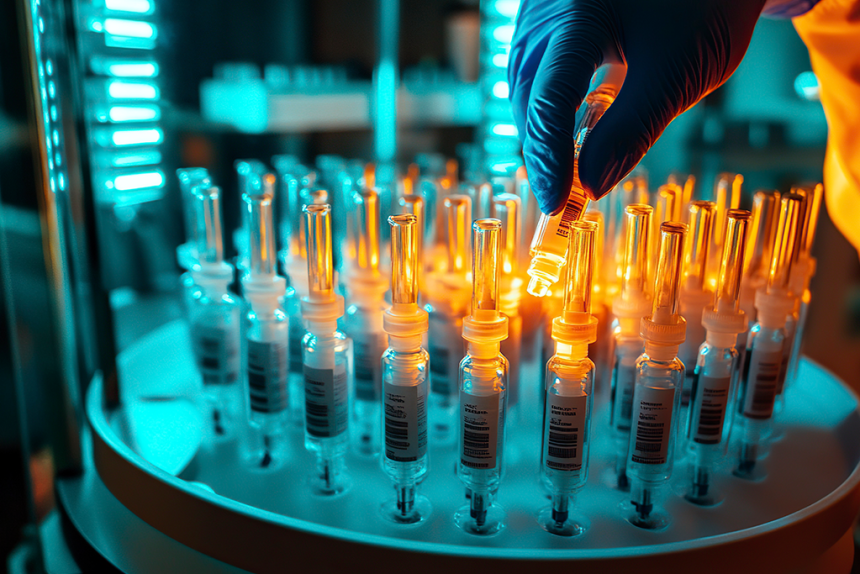
In the pharmaceutical industry, their role is critical, especially when it comes to drugs given directly into the bloodstream, muscle, or under the skin.
These excipients serve different purposes. Some help dissolve the active ingredient, while others maintain the pH, control viscosity, or preserve sterility. Because parenteral drugs bypass the digestive system, every ingredient must be of the highest purity, commonly referred to as pharmaceutical grade or injectable grade.
Why Purity Is Non-Negotiable
Parenteral routes offer fast drug delivery but also carry higher risks. That’s why excipients used in these formulations must be:
- Pyrogen-free (no fever-causing contaminants)
- Preservative-free (especially for single-dose vials)
- Sterile and highly stable under storage conditions
- Biocompatible, so they don’t irritate or damage tissues
Common Parenteral Excipients
Here are a few examples widely used in injections:
- Sodium chloride : maintains isotonicity
- Water for injection (WFI) : the most common solvent
- Polysorbates : used as solubilizers
- Citric acid and sodium citrate : help in buffering
- PEG (Polyethylene Glycol) : often used in biologics

Growing Demand in Advanced Therapies
With the rise of biologics, mRNA vaccines, and cell therapies, the need for specialized parenteral excipients is growing. These therapies often require custom formulations, and that means new challenges for excipient design, such as compatibility with live cells or long-term cold storage.
Manufacturers are now focusing on custom parenteral-grade excipients that can meet both regulatory expectations and specific therapy needs.